

Vertical Lift System
Every tender lift system has a defined lowering stroke — the vertical distance the platform travels from the stowed position to the waterline. On most vessels, this stroke is sufficient. On vessels with high freeboard, a deep platform recess, or a stern garage where the tender is stored well above the waterline, the standard stroke may not be enough to float the tender off the platform reliably.
The Vertical Lift System adds a dedicated vertical cylinder between the lift arm and the hull structure that moves the entire lift assembly straight down — extending the dive depth beyond what the lift arm alone can achieve. The platform reaches the water. The tender floats free. Every time.
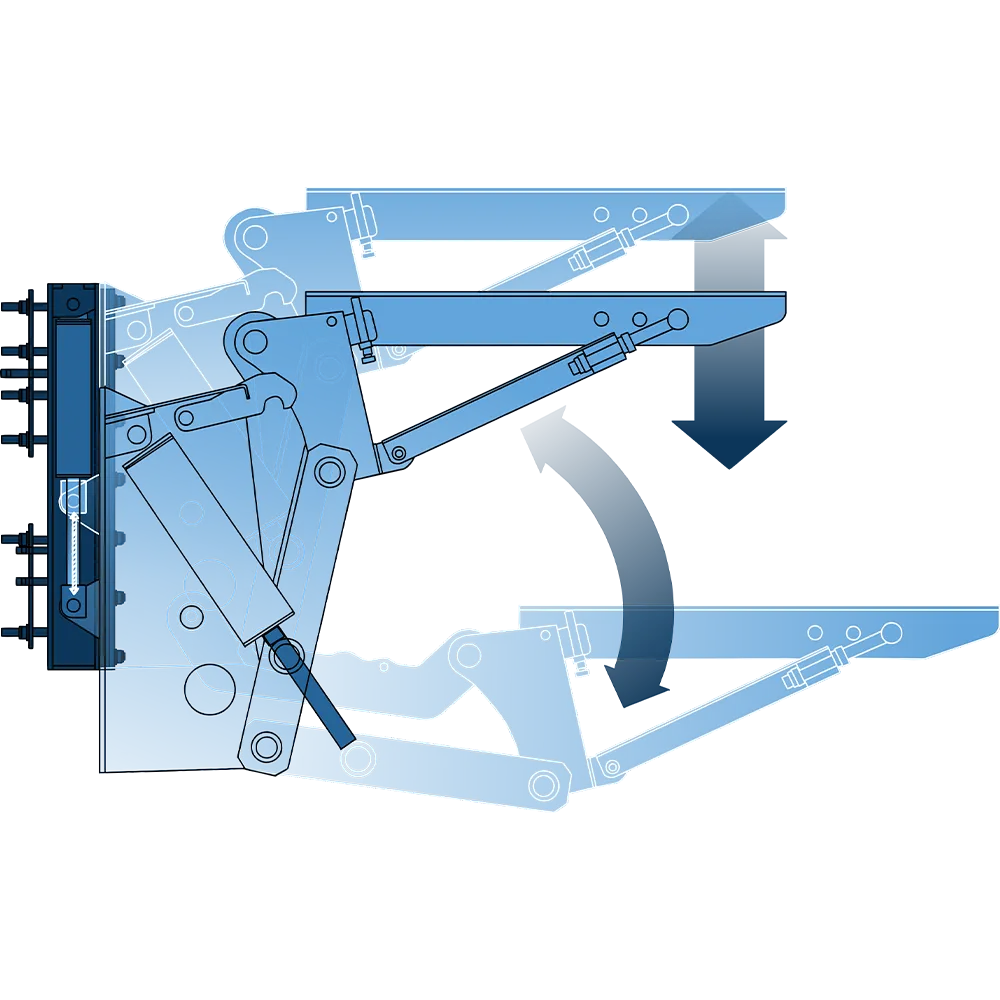
Vertical cylinder moves the entire lift assembly deeper — the tender clears the platform every time.
The vertical cylinder is mounted between the lift arm and the vessel's hull structure. When it extends, it pushes the lift arm pivot point straight down — lowering the entire lift assembly, including the platform, deeper into the water than the lift arm arc alone can reach. The extended position allows the platform to reach the waterline even on vessels where the standard stroke falls short.
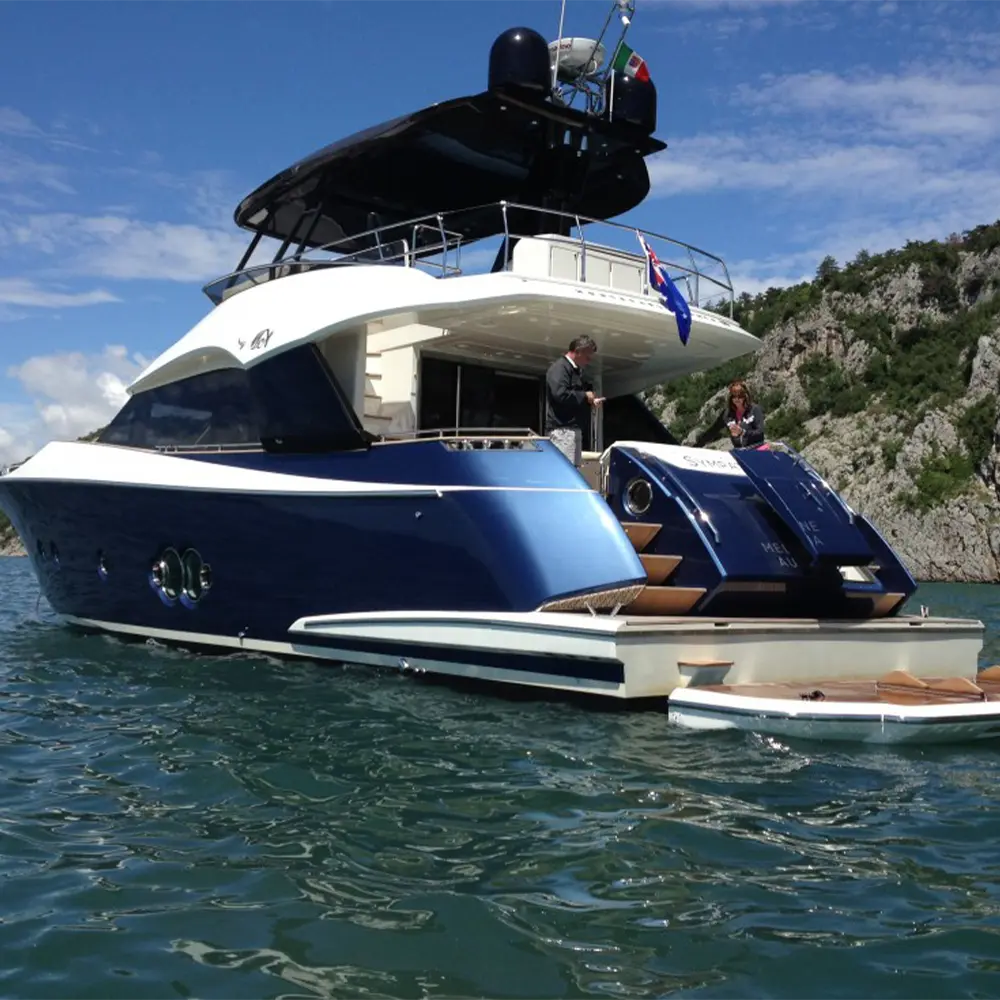
This extended dive depth solves a specific and common problem: the tender that almost floats off the platform but not quite — requiring the crew to push it off manually, or worse, rock the vessel to break it free. With the vertical cylinder extended, the platform goes deep enough that the tender floats off cleanly under its own buoyancy.
The extended depth is also relevant for varying water levels. A vessel on a tidal berth may have 30 centimetres more freeboard at low tide than at high tide. The vertical cylinder accommodates this variation, ensuring the platform reaches the water regardless of the tidal state.
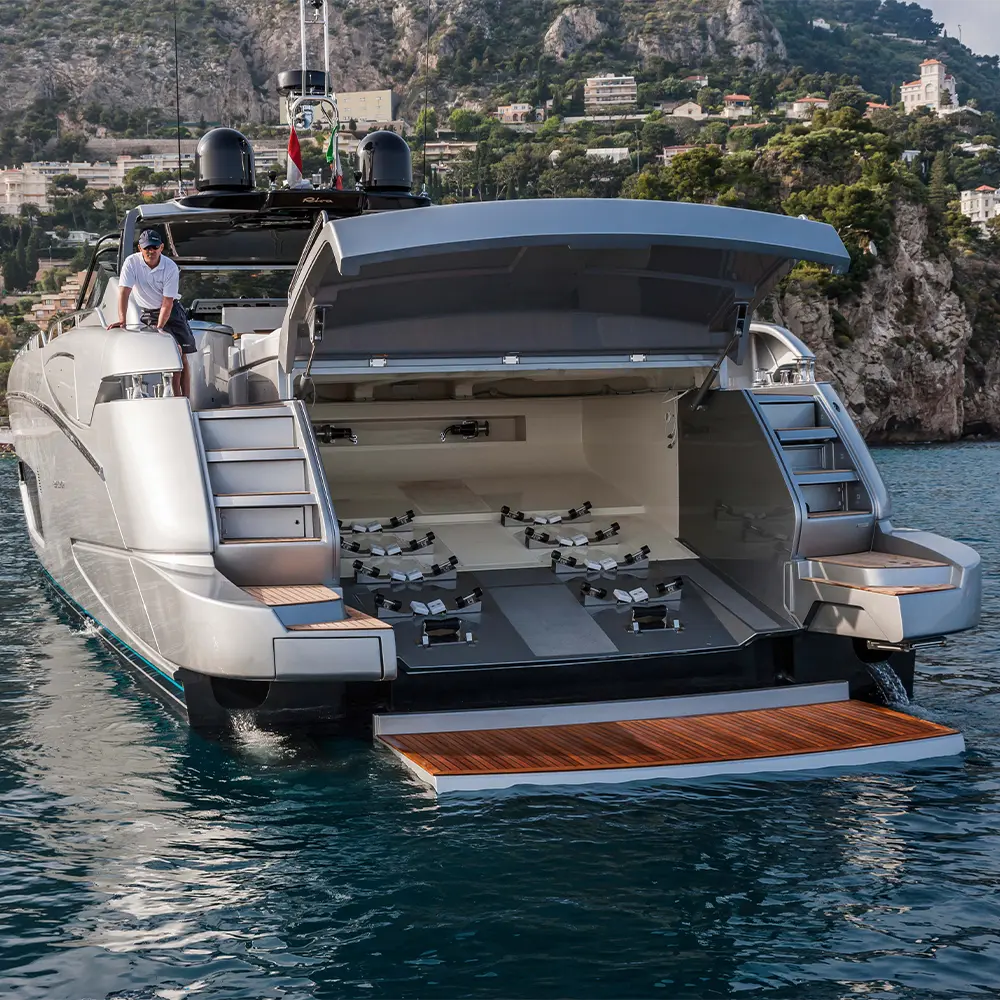
Platform lowers to garage floor level — direct access for loading, maintenance, and walk-on use.
The vertical cylinder's downward stroke does not only serve the waterline. It also allows the platform to be lowered to the garage floor level in the stowed position — flush with the garage floor, accessible as a flat, level surface from inside the garage.
This garage-level access is particularly valuable on vessels with a stern garage where the tender is stored inside and launched through the stern opening. Lowering the platform flush with the garage floor means the tender can be moved onto the platform using a trolley or under its own power, without any ramp or height difference to overcome.
For the owner, this means the platform becomes a true extension of the garage floor: a level, accessible surface for tender loading, equipment stowage, or walk-on use when the vessel is at anchor and the garage is open.
Special water-resistant polymer protects all sliding interfaces — smooth operation under permanent water contact.
The vertical movement relies on precision sliding surfaces between the fixed hull structure and the moving lift assembly. These surfaces operate in the submerged zone — permanently wet, subject to salt water, marine growth, and the abrasive particulate matter present at the waterline.
This material choice is critical because the vertical cylinder and its sliding interfaces operate in the worst possible marine environment. Standard lubricated steel-on-steel sliding surfaces would corrode, seize, or accumulate marine growth within a short operating period. The waterproof polymer eliminates these failure modes by providing a corrosion-free, low-friction sliding surface that does not require lubrication and does not degrade in the submerged zone.
The polymer is applied to all sliding contact surfaces during manufacturing and is designed for the full service life of the system. It does not require periodic replacement under normal operating conditions.
Visual overview
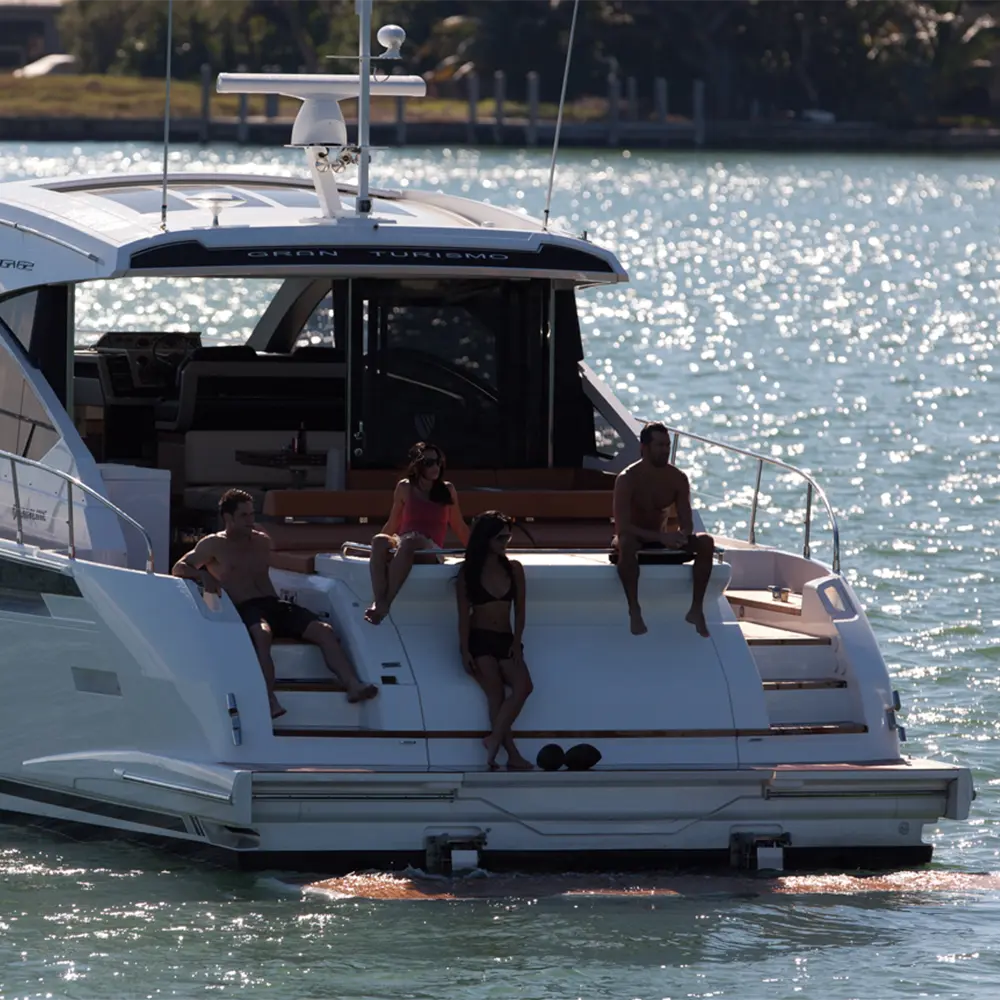
Examine the Vertical Lift System from every angle — side view showing the vertical cylinder in retracted and extended positions, cross-section detail of the sliding surfaces, and the platform at deck, garage, and waterline levels.


Technical Specifications
A vertical extension module for H+B tender lift systems. Adds a dedicated vertical cylinder to increase dive depth and enable garage-level platform access. Integrated into the lift system's hydraulics and controls.
FUNCTION
Dedicated vertical cylinder between lift arm and hull structure. Extends downward to increase platform dive depth beyond standard lift arm stroke. Also allows platform to reach garage floor level.
MATERIAL
Electropolished stainless steel AISI 316L (1.4404). Sliding surfaces lined with special waterproof polymer for low-friction, corrosion-free operation in permanently submerged conditions.

INTEGRATION
Pre-assembled as part of the complete lift system. Connected to the same hydraulic circuit and controlled from the same panel and wireless remote as the main lift.
DIVE DEPTH
Additional vertical travel distance configured per project based on vessel freeboard, waterline position, and required tender clearance.
GARAGE ACCESS
Platform can be lowered to garage floor level for direct loading, maintenance access, and walk-on use. Flush transition between garage floor and platform surface.

"The lifts are not just functional — they match our design and standards. With H+B, it feels more like a team than a supplier relationship."

Frequently asked questions
Answers to the most common questions about the Vertical Lift System.
The Vertical Lift System is designed to integrate with the H+B tender lift range. It is configured during the project phase based on the vessel's freeboard and the required dive depth. Compatibility is confirmed during the engineering phase.
The additional vertical travel is specified per project based on the vessel's freeboard, the waterline position relative to the platform, and the tender's hull depth. The stroke is configured to ensure reliable float-off under the expected operating conditions.
No. The vertical movement is integrated into the lift system's control architecture. It is operated from the same wired panel and wireless remote as the main lift. No additional control hardware is required.
The Vertical Lift System moves the entire lift assembly straight down to increase dive depth. It adds a vertical axis of movement to the system. The Tilt Lift System tilts the platform to change its angle relative to the water surface. They address different problems and can be combined on the same installation.
Yes. The vertical cylinder's stroke is configured to allow the platform to reach the garage floor level. This creates a flush, accessible surface for tender loading and equipment handling directly from inside the garage.
Need more help?
Our team is ready to answer your questions
Customization option
Tailored solutions perfectly suited to your needs. At H+B technics, we not only offer our proven products but also the opportunity to customize them according to your specific requirements. Our experienced team is ready to support you in developing and realizing bespoke products for your yacht or project, always with a strong focus on quality, innovation, and precision.
Whether it’s special dimensions, functions, or an entirely new design, we bring your vision to life. Rely on our expertise and let’s make your ideas a reality together.
Robin Zimmermann
Sales


Start your project
The Vertical Lift System is configured as part of your complete lift system. Share your vessel's freeboard, waterline position, and tender specification and we support you from the first concept to the finished installation.


